
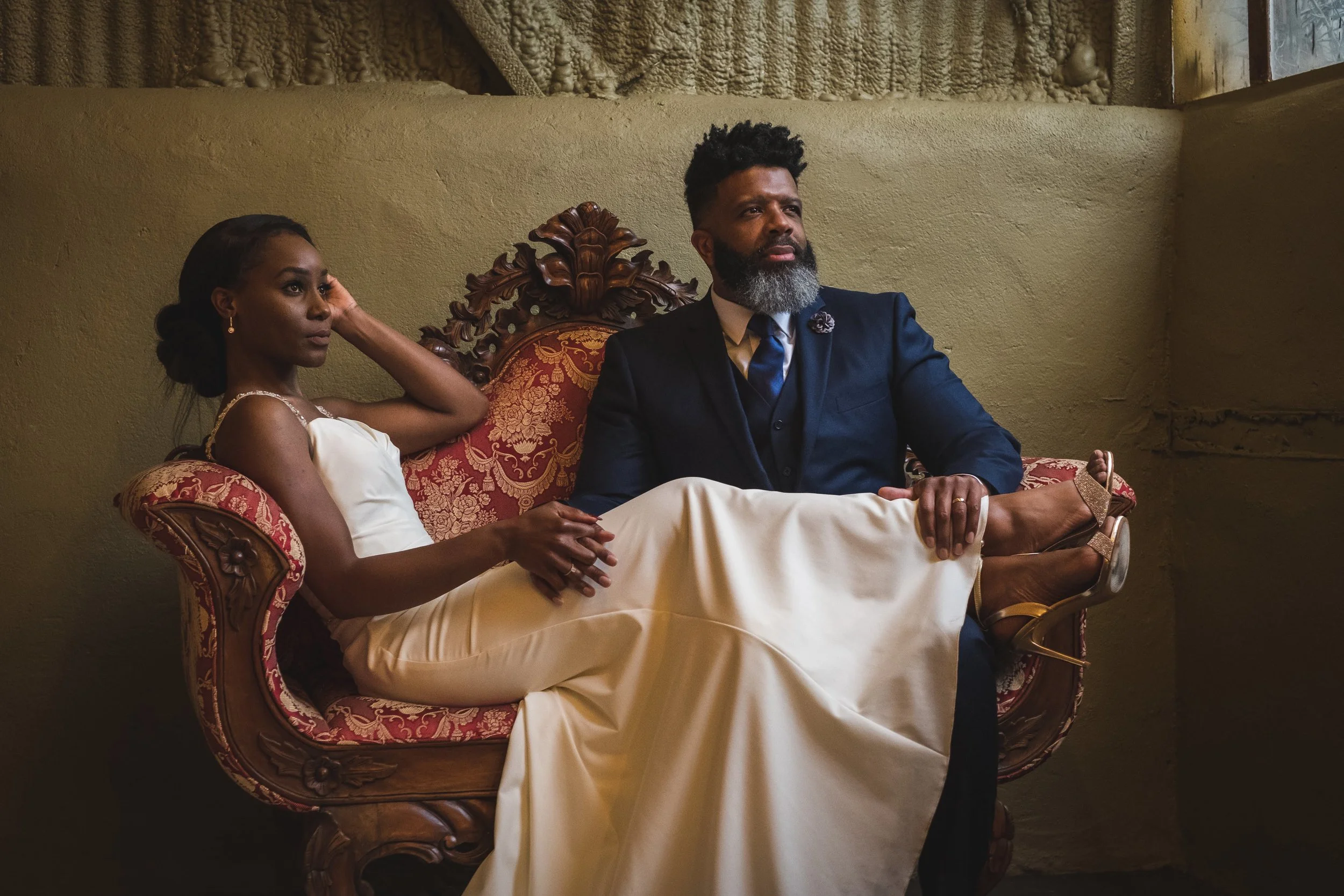
Family
Stewarding Form And Function In Service of Story
My story and my wife’s story were shaped long before they intersected. Each was marked by contradiction, disruption, and growth, with seasons of clarity alongside seasons that felt unresolved or unfinished. Our paths began in different places, West Memphis, Arkansas, and Detroit, Michigan, and unfolded through experiences that did not always make sense in the moment, but ultimately formed us for what would come next.
Those stories converged in Orlando in 2013. We began dating several years later and were married in 2018. In hindsight, it is clear that the complexity of our individual journeys was not accidental. It prepared us not only for one another, but for the responsibility of building a life rooted in intention rather than convenience.
When I reflect on the strength of our marriage, I often understand it through the relationship between form and function. The best things in the world embody both fully. One without the other may appear to work for a time, but it does not endure.
In our marriage, these roles are not assigned by tradition or expectation, but emerge naturally from the gifts, temperaments, and responsibilities each of us carries. I tend toward function. I am oriented toward structure, provision, protection, and the practical work required to sustain a family. I think in terms of systems, constraints, and long-term responsibility. Much of my work is quiet and unseen, focused on creating stability and margin.
My wife tends toward form. She brings beauty, intuition, expression, and emotional clarity. She shapes the atmosphere of our home and our shared work, giving language, hospitality, and meaning to what might otherwise remain purely mechanical. She attends to the human texture of life, how things feel, how people are received, and how spaces communicate care.
Neither is sufficient on its own. Function without form becomes rigid and lifeless. Form without function becomes fragile and unsustainable. Together, they create something resilient, humane, and alive.
This understanding shapes how I show up as a husband and father. My role is not simply to produce outcomes, but to create conditions. I work in functional, often invisible ways to ensure that my family has stability, safety, and room to breathe, so that creativity, expression, and growth can flourish. In that sense, my work within my family mirrors my work in the world: designing systems that allow people to live into the power of their unique stories and gifts.
At the center of our family life is a shared commitment to help people find and fearlessly move into the power of who they are becoming. For me, that commitment begins at home, in the daily practices of presence, responsibility, and care.
We are raising our son with the hope that he will come to understand his life as both a gift and a responsibility, grounded in dignity, curiosity, and love for others. My prayer is that our marriage and family life would reflect wholeness rather than performance, faithfulness rather than fear.
This posture is grounded in Scripture and shapes how I understand place, responsibility, and love.
“Seek the welfare of the city where I have sent you, and pray to the Lord on its behalf, for in its welfare you will find your welfare.” — Jeremiah 29:7
This is how I understand my role as a husband and father: to faithfully carry what has been entrusted to me, to honor both form and function, and to create the conditions for my family and others to live into the fullness of their stories with courage and grace.
